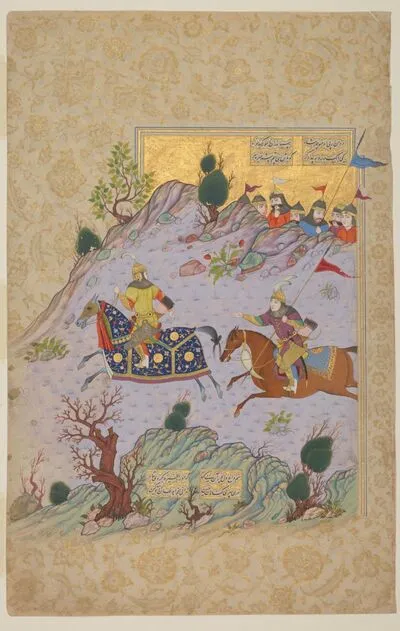
منوچهر در تعقیب تور، قاتل پدرش، از شاهنامه فردوسی
تأییدشدهManuchihr pursuing Tūr, his father's murderer, from the Book of Kings (Shāhnāma) by Firdausī
این برگ از شاهنامه فردوسی، منوچهر را در حال تعقیب تور نشان میدهد. این اثر با مرکب، رنگ و طلا بر روی کاغذ در قزوین یا اصفهان بین سالهای ۱۵۹۰ تا ۱۶۰۰ میلادی تولید شده است.
نوع مدخل: گونه / تیپ
منوچهر در تعقیب تور، قاتل پدرش، از شاهنامه فردوسی در یک نگاه
- رده:
- نمایهٔ مرجع موزهای
- تاریخ:
- 1590-1600
- محل:
- Ireland
- مجموعه:
- Chester Beatty
درجهٔ اعتبار: تأییدشده · ۱ منبع ثبتشده · همهٔ مقادیر از جدول مشخصات همین صفحه نقل شدهاند.
تصاویر مستند
شرح، صاحب عکس، رکورد اصلی و وضعیت حقوق اعلامشدهٔ هر تصویر جداگانه آمده است.
دربارهٔ این مدخل
بازنویسی فارسی شرحِ رکورد نهاد ارائهدهنده در یوروپیانا؛ متن با کمک مدل زبانی از همان منبع برگردانده شده، هر جمله در بازبینی دوم با منبع سنجیده شده و هر عدد آن بهطور خودکار با منبع مقابله شده است.
این برگ شامل نقاشی و متن فارسی به خط نستعلیق با حاشیههای طلاکوب است. این اثر بخشی از مداخلهای است که توسط محمد زمان در اصفهان در سالهای ۱۶۷۵ تا ۱۶۷۶ انجام شده است. ابعاد این نمونه ۴۰۸ در ۲۶۲ میلیمتر است.
رکورد اصلی — بازیابی ۲۷ اکتبر ۲۰۲۶. اندازهها، تاریخگذاری و پیشینهٔ مالکیت به همین نمونهٔ ثبتشده تعلق دارند و به همهٔ نمونههای مشابه تعمیم داده نمیشوند.
مشخصات رکورد موزه
| عنوان در رکورد منبع | Manuchihr pursuing Tūr, his father's murderer, from the Book of Kings (Shāhnāma) by Firdausī |
|---|---|
| ردهٔ شیء | کتاب و نسخهٔ خطی |
| گونهٔ ثبتشده در رکورد | Manūchihr pursuing Tūr, his father's murderer, from the Book of Kings (Shāhnāma) by Firdausī. To complete Firdausi’s tale of king Farīdūn, the injustice of Iraj’s murder is finally resolved a generation later. Iraj’s grown son Manūchihr rides after one of the murderers, his uncle Tūr, and will shortly avenge his innocent father’s death. Folio, ink, colours and gold on paper, Persian text in nasta`liq script, with painting (on recto) and gold-painted borders, from the Book of Kings (Shāhnāma) by Firdausī (d. 1020), folio produced Qazvin or Isfahan, Iran, c. 1590-1600, this painting (or pos |
| سازنده/پدیدآور | Unknown |
| خاستگاه/فرهنگ | Ireland |
| مجموعه | Chester Beatty |
| شناسهٔ رکورد | Europeana /1100/2028 |
جزئیات بازیابیشده از رکورد منبع
| مواد / رسانهٔ ثبتشده | Paper (material)؛ Pigment (material)؛ Ink (material)؛ Gold pigment |
|---|---|
| ابعاد / گسترهٔ ثبتشده | 408 mm x 262 mm (height x width) |
| تاریخ در رکورد منبع | 1590-1600 |
| شرح موضوع در منبع | Manūchihr pursuing Tūr, his father's murderer, from the Book of Kings (Shāhnāma) by Firdausī. To complete Firdausi’s tale of king Farīdūn, the injustice of Iraj’s murder is finally resolved a generation later. Iraj’s grown son Manūchihr rides after one of the murderers, his uncle Tūr, and will shortly avenge his innocent father’s death. Folio, ink, colours and gold on paper, Persian text in nasta`liq script, with painting (on recto) and gold-painted borders, from the Book of Kings (Shāhnāma) by Firdausī (d. 1020), folio produced Qazvin or Isfahan, Iran, c. 1590-1600, this painting (or possibly entire folio) added as part of an intervention led by Muḥammad Zamān, Isfahan, Iran, 1675-1676. This is one of twenty-two folios in the Chester Beatty, all from the same partial copy (possibly never fully completed) of Firdausī's Shāhnāma: ten folios are in a modern binding, twelve are mounted separately. Most of these folios are not directly sequential, and fall into three sets, narrating the earliest kings, Farīdūn and his descendants, and Rustam. |
| مرجع بازیابی | https://www.europeana.eu/item/1100/2028 |
| تاریخ بازیابی منبع | 2026-10-24 |
جزئیات تکمیلی رکورد منبع
| مکان در رکورد | Isfahan؛ Qazvin |
|---|---|
| رکورد بازیابیشده | https://viewer.cbl.ie/viewer/ppnresolver?id=Per_277_15 |
| تاریخ بازیابی | 2026-10-27 |
نشانههای شناسایی
ابعاد این نمونه ۴۰۸ در ۲۶۲ میلیمتر است.
دارای حاشیههای طلاکوب است.